
Introduction
Marketing has evolved dramatically over the past few years, and in 2026, personalization has become the driving force behind successful brand campaigns. With advancements in Artificial Intelligence (AI), businesses are now able to understand customer behavior more accurately than ever before, creating highly targeted experiences that improve engagement and conversion rates.
What is AI-Powered Personalized Marketing?
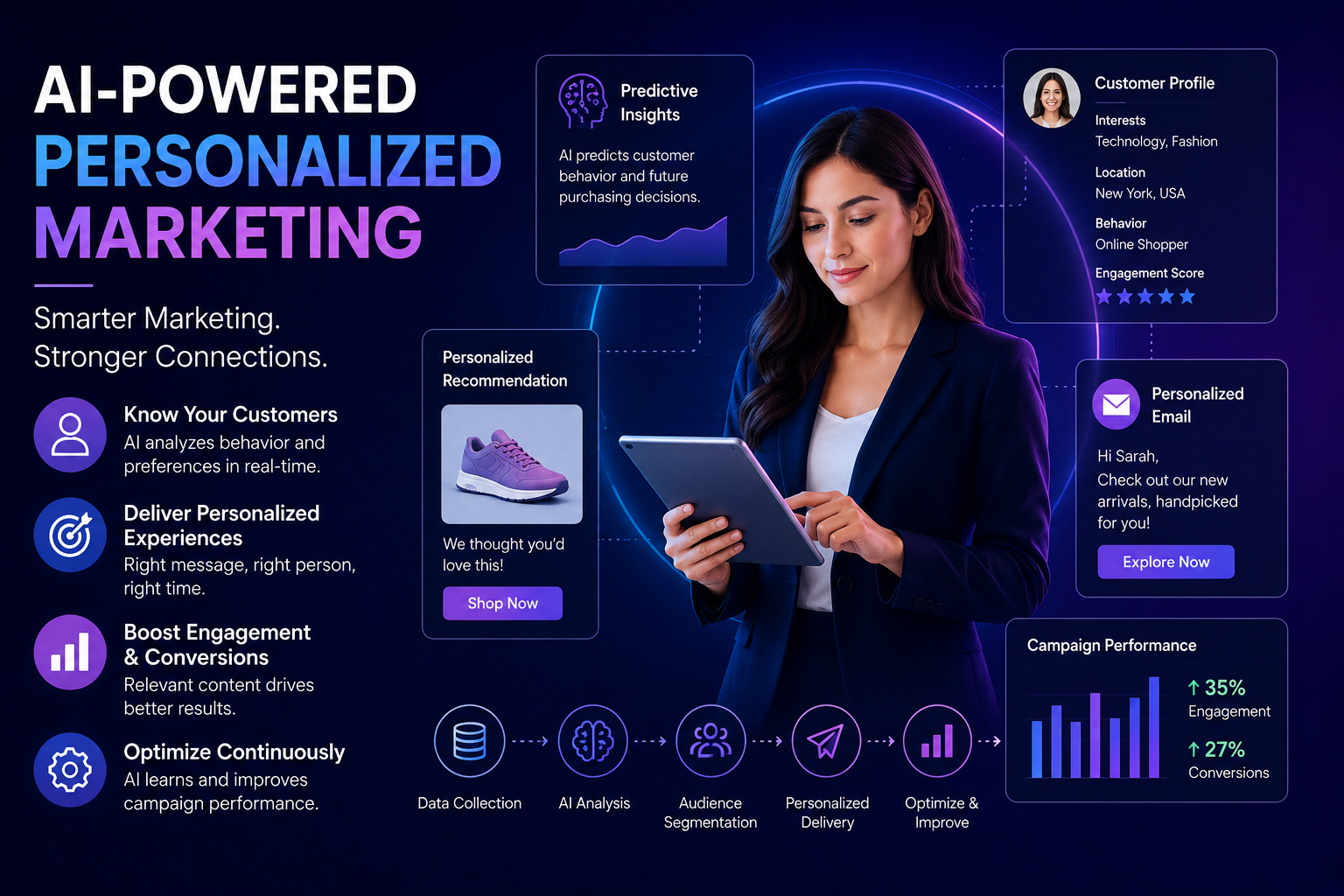
AI-powered personalized marketing uses machine learning algorithms, customer data, and predictive analytics to deliver customized content, product recommendations, and advertisements to individual users based on their interests, behavior, and purchasing history.
Unlike traditional marketing, which targets broad audiences, AI enables brands to communicate with customers on a one-to-one level.
Why Brands Are Adopting This Strategy
1. Improved Customer Experience
Modern consumers expect brands to understand their needs. Personalized recommendations, emails, and advertisements create a smoother and more relevant customer journey.
2. Higher Conversion Rates
When customers receive content that matches their interests, they are more likely to take action. Businesses using AI-driven personalization often experience higher click-through rates and increased sales.
3. Better Marketing Efficiency
AI automates audience segmentation and campaign optimization, reducing manual effort while maximizing return on investment (ROI).
Key Trends Shaping Personalized Marketing in 2026
Predictive Customer Behavior
AI can analyze past interactions and predict future purchasing decisions, allowing brands to engage customers before they make a buying decision.
Dynamic Content Generation
Websites and advertisements now automatically adapt their content based on user preferences, location, and browsing behavior.
Conversational AI
Advanced chatbots and virtual assistants provide instant support and personalized recommendations, improving customer satisfaction and retention.
Hyper-Personalized Email Campaigns
Email marketing is becoming smarter, with AI generating customized subject lines, content, and offers tailored to individual recipients.
Real-World Examples
Leading companies such as Netflix, Amazon, and Spotify have demonstrated the power of personalization. Their recommendation systems analyze user behavior and continuously improve content suggestions, keeping users engaged and increasing customer loyalty.
Many small and medium-sized businesses are now adopting similar technologies through affordable AI marketing platforms.
Challenges and Ethical Considerations
While personalization offers significant benefits, businesses must ensure transparency and responsible data usage. Customers are increasingly concerned about privacy, making it essential for brands to follow data protection regulations and obtain proper consent.
Building trust is just as important as delivering personalized experiences.
Conclusion
AI-powered personalized marketing is no longer a future concept—it is the present reality. Businesses that leverage data intelligently and create meaningful customer experiences will gain a competitive advantage in an increasingly crowded marketplace.
As technology continues to evolve, personalization will become even more sophisticated, making it one of the most important marketing strategies for brands looking to grow in 2026 and beyond.